How Brownsville's Humidity Destroys the Wrong Fence Materials — And What to Use Instead
Walk through almost any older neighborhood in Brownsville and you will see it.
A wood fence that started gray two years ago and now shows black streaks of mildew running down every board. A chain link fence with rust bleeding from every post base onto the concrete below. A wrought iron gate with orange flakes of corrosion eating through a paint job that looked great when it went up.
These fences did not fail because they were installed badly. Most of them were installed just fine.
They failed because someone chose the wrong material for Brownsville's climate.
This city sits in one of the most demanding environments in all of Texas for outdoor building materials. The humidity alone would test most fence products. Add relentless summer heat, heavy seasonal rain, and a steady salt breeze drifting in off the Gulf of Mexico — and you have conditions that expose every weakness in the wrong fence material fast.
Here is what Brownsville's climate actually does to common fence materials and what you should use instead.
Why Brownsville's Climate Is So Hard on Fences
Most fence manufacturers test their products in controlled conditions. Brownsville is anything but controlled.
The city averages around 65 inches of rainfall per year — nearly double the Texas state average. Relative humidity stays above 70 percent for most of the year. Summer temperatures regularly climb past 95 degrees and hold there for weeks at a time.
Then there is the Gulf factor. Brownsville sits roughly 25 miles from the Gulf of Mexico. Salt particles travel inland on the wind and settle on every outdoor surface. Salt accelerates corrosion on metal. It works its way into wood grain and speeds up deterioration. It breaks down protective coatings faster than humidity alone ever could.
Most fence materials sold at national home improvement stores are not designed with these combined conditions in mind. They are designed for average climates. Brownsville is not average.
The Materials That Fail Fast in Brownsville
Untreated or Poorly Treated Wood
Wood is the most common fence material in the country. It is also one of the most vulnerable in South Texas.
Untreated wood absorbs moisture like a sponge. In Brownsville's humidity, that process never really stops. The wood swells when it rains and shrinks when it bakes in the sun. That constant movement cracks the grain and opens pathways for moisture, mold, and insects to move in deeper.
Termites make the problem worse. The Rio Grande Valley sits in one of the heaviest termite activity zones in the entire United States. An untreated wood fence gives termites exactly what they want — moist, ground-level wood with nowhere to go but up.
Homeowners who install untreated pine fencing in Brownsville often see visible rot at the post bases within two to three years. By year five, the fence leans. By year seven or eight, it needs full replacement.
Low-Grade Galvanized Chain Link
Standard galvanized chain link holds up reasonably well in dry climates. In Brownsville, the salt air goes to work on it almost immediately.
The zinc coating that protects galvanized steel from rust is effective — up to a point. Once that coating breaks down from salt exposure and humidity, the bare steel underneath corrodes quickly. Post bases sitting in Brownsville's clay-heavy soil are especially vulnerable. Moisture collects at ground level and accelerates the process from the bottom up.
Cheap galvanized chain link installed without proper post protection can show significant rust within three to four years in this climate.
Bare or Improperly Coated Wrought Iron
Wrought iron looks incredible. It is also one of the most rust-prone materials you can install in a coastal humid climate without proper surface treatment.
Iron and salt air are a destructive combination. Without a quality rust-inhibiting primer and a durable topcoat, wrought iron begins to corrode at joints, welds, and any spot where the coating gets scratched or chipped. Once rust takes hold on iron, it spreads beneath the surface even where you cannot see it yet.
Wrought iron installed with inadequate coating in Brownsville can show deep rust penetration within just a couple of years.
Low-Quality Vinyl
Vinyl is often marketed as the maintenance-free fencing solution. Quality vinyl lives up to that promise. Cheap vinyl does not.
Low-grade vinyl becomes brittle in prolonged UV exposure. Brownsville averages over 225 sunny days per year. Thin, low-quality vinyl panels crack and fade under that constant sun exposure. Once a vinyl panel cracks, moisture gets inside and the structural integrity of the whole section weakens.
Not all vinyl is the same. Thickness and UV stabilizer content vary widely between manufacturers.
What to Use Instead
Pressure-Treated Wood — Done Right
Wood is not a lost cause in Brownsville. But it requires the right species, the right treatment, and the right installation habits.
Use pressure-treated pine rated for ground contact. Cedar is an even better choice — it naturally resists moisture and insects better than most wood species. Keep the base of every panel and post out of direct soil contact. Apply a quality sealant or stain rated for hot, humid climates every one to two years without skipping.
Wood done right in Brownsville can last 15 years or more. Wood done carelessly rarely survives a decade.
Vinyl-Coated Chain Link
For chain link applications, always choose vinyl-coated over bare galvanized in this climate. The vinyl layer seals the steel against moisture and salt air and extends the life of the fence dramatically.
Choose a heavier gauge wire and hot-dipped galvanized posts beneath the vinyl coating for maximum protection. Black and dark green vinyl coatings tend to hide surface wear better than bare silver finishes over time.
Powder-Coated Aluminum
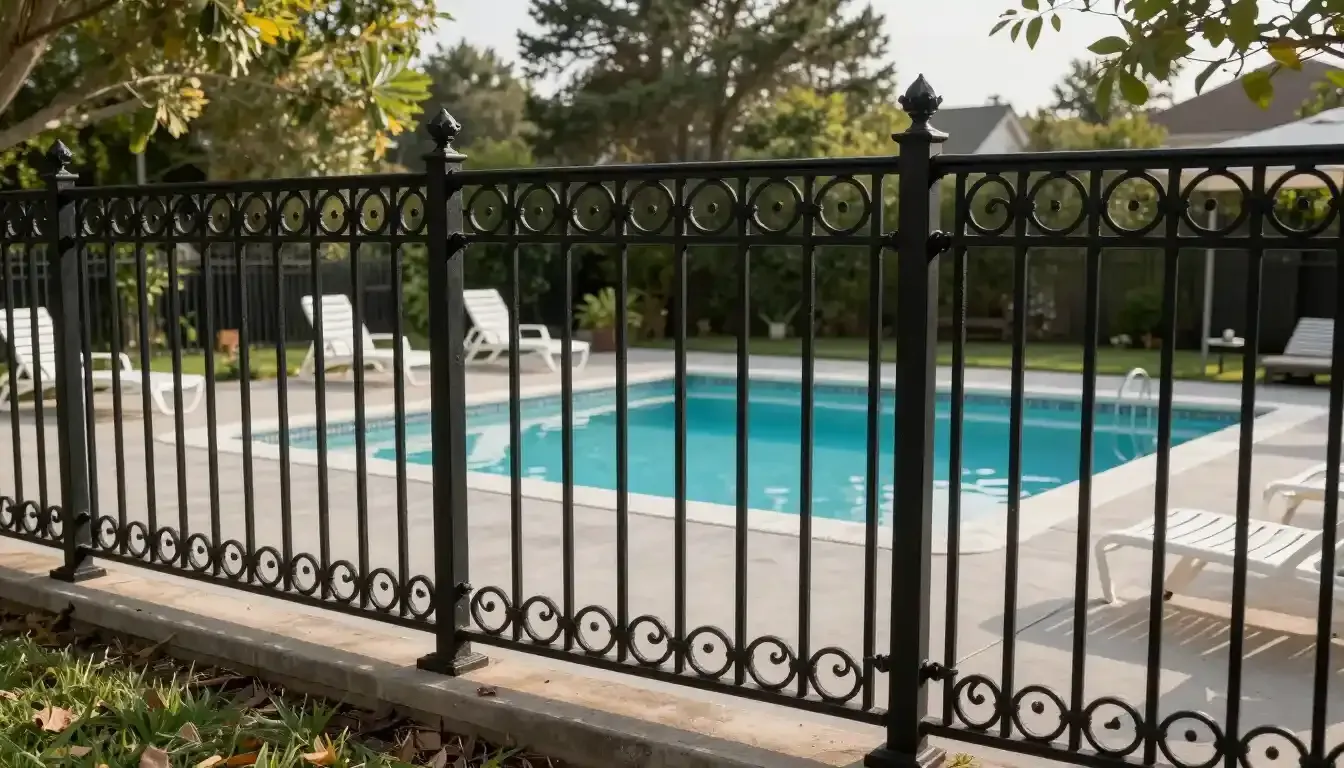
Aluminum stands out as one of the best all-around fence materials for Brownsville's conditions. It does not rust. It handles humidity well. And a quality powder coat finish seals it against the Gulf salt air far better than paint ever could.
Powder coating bonds to the aluminum surface through an electrostatic process and then cures under heat. The result is a finish that resists chipping, fading, and corrosion at a level traditional paint simply cannot match in a coastal climate.
Properly Treated Wrought Iron
Do not write off wrought iron — just insist on proper surface preparation and coating. A rust-inhibiting primer followed by a high-quality exterior topcoat rated for coastal environments gives wrought iron real longevity in Brownsville.
Plan to inspect it annually and touch up any chips or scratches before rust gets a foothold. A full repaint every three to four years keeps the protection strong. Wrought iron maintained correctly in this climate can last for decades.
Commercial-Grade Vinyl
Spend more upfront and buy thick, commercial-grade vinyl with built-in UV stabilizers. The price difference between builder-grade and commercial-grade vinyl is real — but so is the performance gap in a climate like Brownsville's.
Quality vinyl does not crack, fade, warp, or rot. It holds its color and structural integrity through years of Gulf Coast summers without asking much in return.
The Pattern That Costs Brownsville Homeowners the Most Money
The most expensive fencing mistake in this market follows a predictable pattern.
A homeowner picks the cheapest material and the lowest bid. The fence looks fine for a year or two. Then the climate does what it always does. By year three or four the problems are visible. By year five or six a repair or full replacement is on the table.
They end up spending more than if they had chosen the right material from the start.
Brownsville's climate is not forgiving. The right fence material chosen upfront saves money, saves time, and saves the headache of dealing with a failing fence in the middle of a South Texas summer.
Talk to Someone Who Knows This Climate
Brownsville Fencing Company has installed fences across Cameron County for years. We have seen what this climate does to every material on the market. We only recommend products we trust to hold up in the Valley's specific conditions.
Contact us today for a free estimate. We will help you choose a fence built for Brownsville — not just built for somewhere else.
You might also like