The Best Low-Maintenance Fence Options for South Texas
A homeowner in Harlingen learned a hard lesson a few years back.
He installed a beautiful wood privacy fence around his backyard. Stained it himself. Took pride in how it looked. His neighbors complimented it every time they saw him outside.
Then life got busy. He skipped the annual sealing one year. Then another. South Texas did the rest.
Two years of neglect in this climate turned a fence he was proud of into an eyesore he was embarrassed by. Gray boards. Black mildew streaks. A post that wobbled when you grabbed it.
He called us to talk about replacement options. The first thing he said was — whatever you put in, I need it to take care of itself.
He is not alone. Most homeowners in the Rio Grande Valley want a fence that looks good without demanding constant attention. The good news is that several great options exist. The key is knowing which materials actually deliver on that promise in South Texas conditions — and which ones just claim to.
What Low-Maintenance Really Means in South Texas
Low-maintenance means something specific in this part of the state.
It does not mean zero maintenance. Every fence needs some attention over time. But a truly low-maintenance fence in South Texas survives the humidity, heat, salt air, and heavy seasonal rain without requiring you to touch it more than once or twice a year at most.
That is the bar. Here are the materials that clear it.
Vinyl Fencing
Vinyl sits at the top of the low-maintenance list for South Texas — and it is not particularly close.
It does not rust. It does not rot. Termites have no interest in it. The humidity that destroys wood and corrodes metal does virtually nothing to quality vinyl. A commercial-grade vinyl fence can go years in Brownsville's climate without asking for anything more than an occasional rinse with a garden hose.
The key word there is commercial-grade. Cheap, thin vinyl becomes brittle under prolonged UV exposure. South Texas averages over 225 sunny days per year. Builder-grade vinyl panels crack and fade under that kind of sun load.
Spend the extra money on thick, UV-stabilized vinyl from a reputable manufacturer. The upfront cost difference pays for itself many times over in the years of hassle-free ownership that follow.
What maintenance looks like: Rinse with a garden hose as needed. Inspect posts and panels once a year. That is about it.
Powder-Coated Aluminum Fencing
Aluminum is the low-maintenance champion for decorative and semi-open fence applications in South Texas.
It does not rust. That fact alone makes it a standout in a coastal humid climate where salt air drifts inland from the Gulf and settles on every outdoor surface. Steel rusts. Iron rusts. Aluminum does not.
A powder coat finish takes aluminum's natural corrosion resistance even further. The powder coat bonds directly to the surface through a heat-cured electrostatic process. The result is a finish that holds up against chipping, fading, and salt air far better than traditional paint.
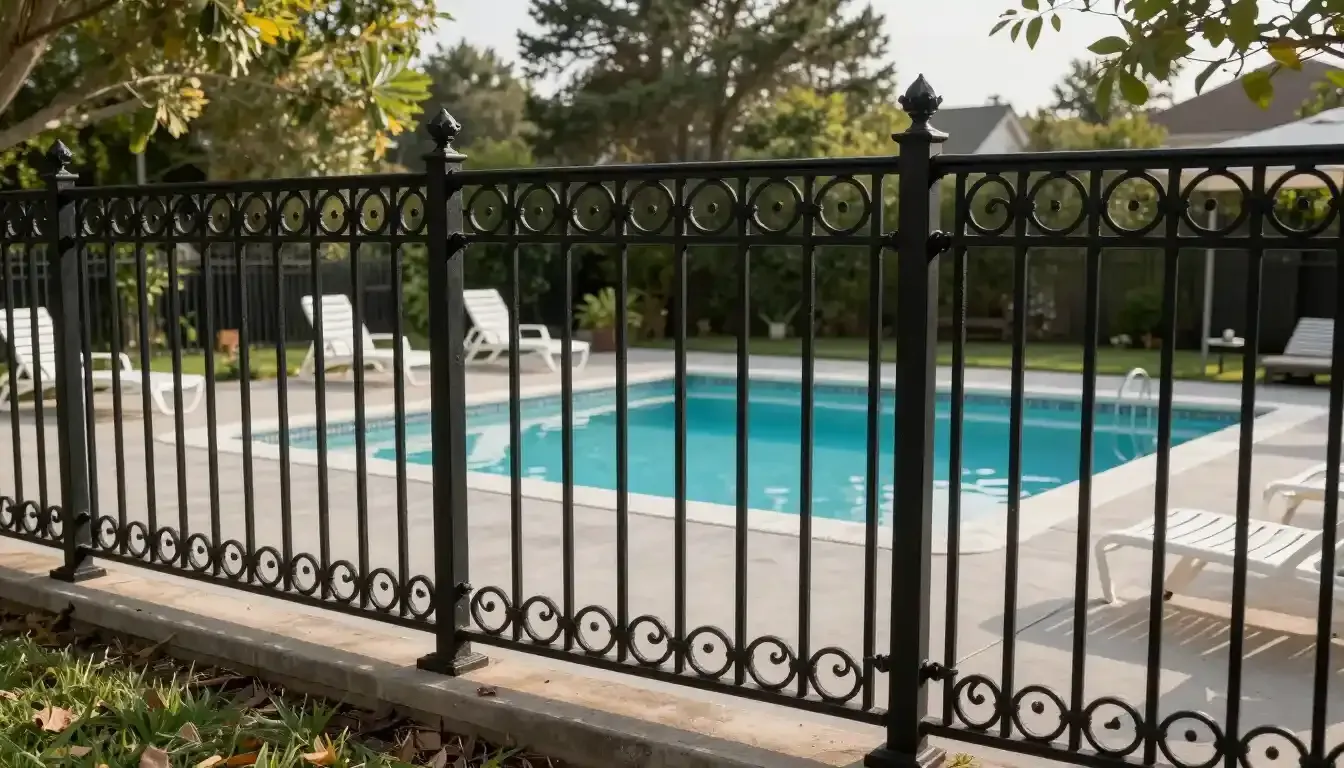
Powder-coated aluminum fencing holds its appearance for years in South Texas conditions with minimal upkeep. It works especially well for pool enclosures, front yard fencing, and any application where a clean decorative look matters as much as durability.
What maintenance looks like: Rinse periodically. Wipe down once or twice a year. Inspect for any chips in the coating and touch up if needed to prevent any moisture from reaching the base metal.
Vinyl-Coated Chain Link
Chain link gets overlooked in conversations about attractive low-maintenance fencing. That is a mistake.
Standard galvanized chain link corrodes in South Texas. The salt air breaks down the zinc coating and rust follows. But vinyl-coated chain link is a different story. The vinyl layer seals the steel against moisture and salt air and extends the fence life dramatically compared to bare galvanized wire.
It handles large yard coverage without a large price tag. It installs quickly. And it stands up to Brownsville's conditions year after year with almost no upkeep required.
Vinyl-coated chain link works especially well for large residential properties, rental properties, commercial lots, and any situation where covering a big area on a reasonable budget matters most.
What maintenance looks like: Inspect once a year for bent sections or damaged posts. Rinse as needed. Requires almost no regular upkeep.
Composite Fencing
Composite fencing blends wood fiber and recycled plastic into a material that looks like real wood but performs like vinyl.
It does not rot. It resists moisture and insects. The color holds up well under South Texas sun without the constant resealing that real wood demands. Composite gives homeowners who love the warm, natural look of wood a way to get that aesthetic without the maintenance burden that comes with it in this climate.
Composite fencing costs more than wood upfront. But factor in the cost of annual sealing, staining, and eventual repairs — and composite often wins on total cost over a ten to fifteen year window.
What maintenance looks like: Rinse periodically to remove dirt and mildew. Light scrubbing once or twice a year keeps it looking fresh. No staining or sealing required.
What to Avoid If Low Maintenance Is the Goal
Some materials get marketed as low maintenance but demand more attention than advertised — especially in South Texas.
- Untreated or builder-grade wood — Requires sealing or staining every one to two years at minimum in this climate. Skip one cycle and the deterioration moves fast.
- Bare galvanized chain link — Handles dry climates fine. Corrodes faster than most homeowners expect in Brownsville's salt air and humidity.
- Improperly coated wrought iron — Beautiful material with real staying power when maintained. But it demands annual rust inspections and periodic repainting. Not the right call for homeowners who want to set it and forget it.
The Real Cost of Low Maintenance
Here is something worth understanding before you choose a fence material.
Low-maintenance fencing almost always costs more upfront than high-maintenance alternatives. Vinyl costs more than wood. Powder-coated aluminum costs more than bare chain link. Composite costs more than pine boards.
But the math works in your favor over time.
A wood fence in South Texas that needs sealing every year, repairs every few years, and full replacement within a decade ends up costing far more than a vinyl fence that stands for 25 years and asks for almost nothing in return.
The homeowners who spend the least on fencing over a lifetime are usually the ones who spent a little more on the right material at the start.
Let Us Help You Choose the Right Fit
Brownsville Fencing Company installs low-maintenance fencing across Brownsville and all of Cameron County. We know this climate. We know which products hold up here and which ones let homeowners down after the first hard summer.
Contact us today for a free estimate. We will walk your property and help you find the right fence for your yard, your goals, and your budget.
You might also like